

The best incense for your home is the one that suits your room, your mood and the way you like to burn it. Start with the size and airflow of the space, then choose a format (stick, cone, coil or Arabian bakhoor), and only then fall in love with a scent. For a home that should feel layered, warm and unmistakably welcoming, Arabian incense made from woods, resins, musk and oud is a graceful place to begin, and our Bukhoor and incense collection was built for exactly that kind of room.
TL;DR
- Choose by room first: small rooms want a slim stick or a brief burn, larger or open-plan spaces suit cones, longer sticks or bakhoor.
- Match the scent to the mood: resinous and woody notes for unwinding, citrus and cedar for focus, floral and spiced notes for entryways and gatherings.
- Know your formats: sticks are versatile, cones are concentrated, coils burn slowly, and bakhoor is the Arabian way of perfuming a whole room.
- Burn with care: crack a window, use a heatproof holder, keep fabrics away and never leave it unattended.
- Incense also makes a distinctive gift, especially when paired with a burner or holder.
Table of Contents
- Start with the room, not the scent name
- Choose the mood you want to create
- The main types of home incense
- How to recognize good incense
- Matching incense to the rooms of your home
- Holders, burners and setup
- Burning incense safely at home
- Incense as a gift
- Our perspective
- Bring Arabian incense into your home
- FAQ
- Sources
Start with the room, not the scent name
It is tempting to shop by fragrance description alone: sandalwood, amber, rose, oud. Yet the same incense can feel like a soft whisper in a spacious living room and an overwhelming cloud in a small study. The more useful first question is practical: how big is the room, and does air move through it?
A simple guide from Forager Vintage suggests noting the approximate square footage and whether a window or fan keeps air circulating, then matching scent strength, burn time and smoke level to that space. In a room under about 100 square feet, a single slim stick burned for 10 to 15 minutes is often plenty. A medium room with a window can take a full stick. Large or open-plan areas hold scent better with cones, longer sticks or a bakhoor session, because the fragrance has more space to unfold.
If you share the space with a partner, roommates or family, choose a lighter version of the scent you love. A fragrance that feels intimate to you can feel insistent to someone else.
Choose the mood you want to create
Once the room is settled, let the mood lead. Fragrance families behave differently in a home:
- Unwinding in the evening: resinous, woody, herbal and lavender-forward scents tend to feel calming. Sandalwood, frankincense and soft amber are natural companions for a bedroom or reading corner. If you like pairing a calming ritual with other lavender comforts, organic lavender bath salts make a gentle companion to an evening incense session.
- Focus and work: citrus, mint, rosemary and dry cedar read as clean and alert, which suits a home office.
- Welcoming guests: floral, sweet and spiced notes greet visitors at an entryway or in a living room without lingering too heavily.
Arabian incense tends to blend several of these moods in one piece. A sandalwood base with vanilla and oud, for example, is warm enough for a quiet evening yet rich enough to make a gathering feel special. Our guide to Middle Eastern incense, bakhoor and oud explores how these layered blends are used to scent a home.
The main types of home incense
The format changes how fast the fragrance arrives, how long it lasts and how much smoke you will see. Here is how the common types compare.
| Format | How it behaves | Best for |
|---|---|---|
| Sticks | The most common and versatile format; some have a bamboo core, traditional ones are coreless and burn through | Everyday use in most rooms |
| Cones | Burn faster with a more concentrated aroma | Quick, strong scenting of a small area |
| Coils (spirals) | Slow-burning and visually striking, with lasting mood | Long sessions, meditation, larger rooms |
| Bakhoor and mamool | Chips, blocks or pastilles warmed on charcoal or an electric burner | Scenting a whole room or home, gatherings, special occasions |
The stick, cone and coil descriptions above follow GQ’s 2025 incense guide, which also explains the difference between traditional incense, made from powdered woods such as sandalwood or agarwood with a natural binder, and perfumed incense, where a neutral base is dipped in scented oils for an immediate aroma. Neither is wrong. Traditional incense offers nuance and subtlety, while dipped versions give a bolder, more immediate scent. It is a matter of what delights your senses.
Arabian bakhoor and mamool
In much of the Arab world, incense is burned as scented chips or blocks called bakhoor. According to Wikipedia’s overview of incense, it is used on special occasions such as weddings or Fridays to perfume the house, burned in a traditional censer called a mabkhara, and customarily passed among guests in the majlis (the reception room) as a gesture of hospitality. Many blends are made from a paste of powdered resin and a sticky binder such as dried fruit, honey or soft resin, then shaped into balls or pastilles.
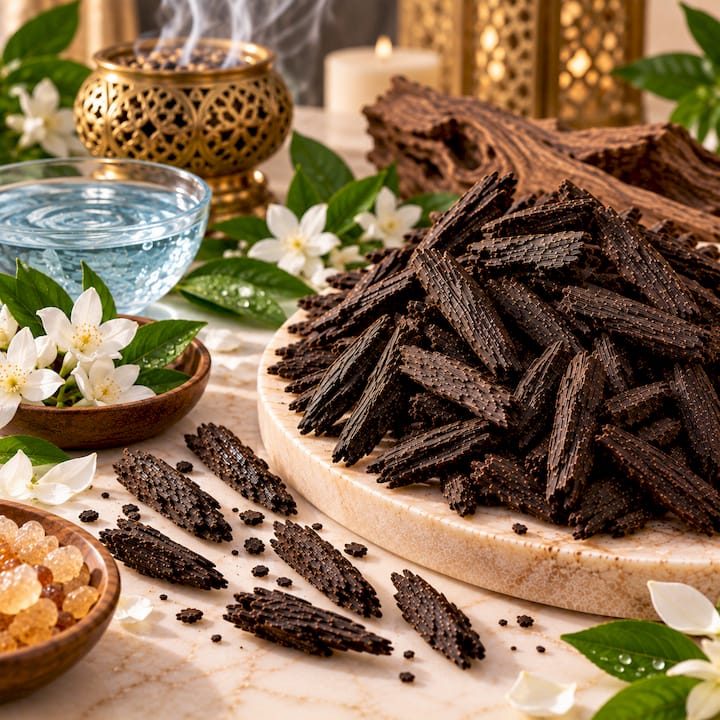
This is the heart of what we offer. Our Bukhoor Collection features authentic handmade Arabian incense, and our Mamool range gathers soft, sweetly layered blends. If you are curious about the family as a whole, our overview of four types of incense to choose from is a good companion read. We also carry Uunsi, an East African incense, for those who want to explore beyond the Gulf.
How to recognize good incense
Quality shows in how incense burns and how the scent lingers. GQ’s fragrance expert Michael Stefanov says well-made incense uses high-quality natural ingredients that burn evenly and fade softly, while many mass-market options rely on fillers that muddy both scent and smoke. A few habits help you judge:
- Look at the ingredients. Woods, resins, herbs and musks are what you want to see named. Specific notes, such as sandalwood, saffron or frankincense, tell you more than a vague “floral” label.
- Understand the method. Masala-style incense, a paste of resins, woods and herbs rolled onto a core, is generally considered the richer class, while dipped incense is a plain blank soaked in perfume oil. A trade guide on Indian incense types also notes that “hand-rolled” describes how an item is made, not how good it is.
- Judge with your nose, in your room. Burn a small amount at the time of day you would normally use it, step out, and return after about ten minutes, since your nose adapts quickly. If the scent feels too strong, burn less of it rather than abandoning the fragrance: very often the issue is the dose, not the scent.
For Arabian incense, the pleasure is in the layers. Our Sandal Sultaniya, for instance, pairs sandalwood with cedar and vanilla, and you can see its full note profile on its product page.
Matching incense to the rooms of your home
Living room. This is where a generous bakhoor or mamool belongs. Sama Dubai combines sandalwood, musk and vanilla in a bukhoor blend that suits a gathering space well. Open-plan rooms carry the scent further, so you need less than you think.
Bedroom. Choose softer, creamier notes and a short session before bed, then ventilate. Sandalwood and vanilla blends such as our Sandal Arabian Incense are gentle companions.
Entryway. A welcoming floral or spiced note greets guests without clinging. Rose, oud and frankincense, as in Mabsoos Bint Al Arab, give a first impression of warmth.
Home office. Lighter, drier woods work best. A short burn, a cracked window and a modest amount keep the air fresh enough to concentrate.
Holders, burners and setup
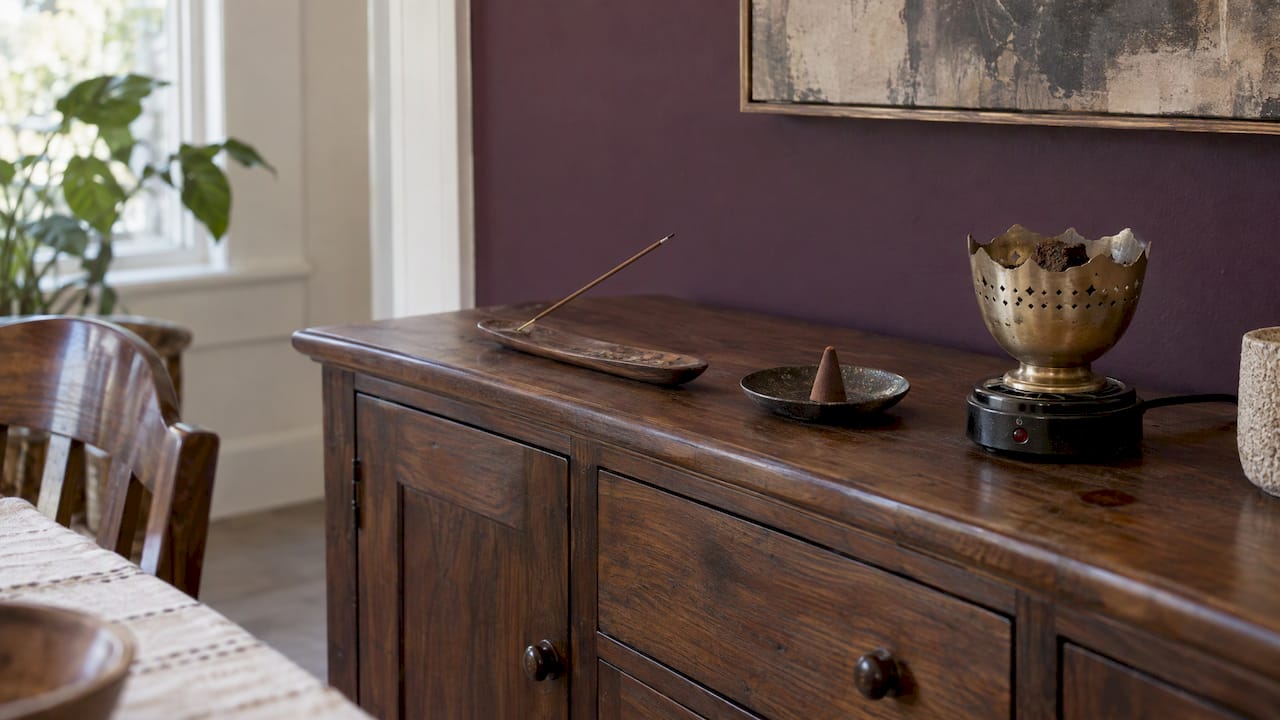
Each format wants its own vessel. Sticks need a holder or ash catcher that keeps the glowing tip clear of surfaces. Cones sit on a heatproof dish. Bakhoor is warmed on a charcoal tablet or electric burner inside a mabkhara, and it should always rest on a heatproof surface. Our step-by-step guide to using an incense burner for sticks, cones and bakhoor walks through each setup. Keeping your incense sealed and stored properly also preserves its aroma, which we cover in how to keep incense fragrant.
Burning incense safely at home
Incense is a ritual to be enjoyed with a little care. The U.S. EPA’s 2001 report on candles and incense as indoor air sources found that incense produces fine particles that can reach the respiratory tract and raises indoor carbon monoxide and benzene, and it treats incense smoke as an indoor pollutant source in rooms where it is burned regularly. A 2023 study in Applied Sciences measured benzene from ten types of incense sticks at 11.1 to 66.5 μg/m³, below the 160 μg/m³ non-occupational limit it cites, though eight of the ten exceeded the WHO guideline value of 17 μg/m³. The authors also note that such limits are set for an eight-hour workday, while a stick burns for roughly 40 minutes.
What that means for you is simple, practical habits:
- Ventilate. Crack a window or run a fan during and after burning.
- Keep sessions short. A brief burn is enough for a well-scented room; in small spaces choose a shorter burn time.
- Use a proper holder. A heatproof dish, burner or mabkhara, set on a stable surface.
- Keep a clear zone. Stay well away from curtains, paper and other fabrics, and from pets.
- Never leave it unattended. Extinguish it fully, and let ash and charcoal cool completely before disposal.
- Take extra care with sensitive households. If anyone has asthma, allergies or smoke sensitivity, or if infants are present, talk to their doctor before burning incense indoors, and avoid burning in sealed rooms.
Picking a larger room where smoke can disperse, as Architectural Digest also advises, makes the whole experience lighter and more pleasant.
Incense as a gift
Incense stands apart from the usual candle at a housewarming. Architectural Digest’s gift guide suggests pairing a set of incense with a holder, which turns a scent into a complete ritual. In the Arabian tradition, bakhoor is itself an act of hospitality, so it feels right as a present for someone who loves to entertain. Choose a blend with broad appeal, such as sandalwood and vanilla, or a more adventurous woody floral like Mukhallat Mabsoos with musk and saffron, and add a burner so the recipient can begin straight away.
For a playful, fruitier note, Youm Al Khamis blends sandalwood and musk with cantaloupe.
Our perspective
We believe a home should smell like somewhere you want to stay. That is why we think about incense the way a perfumer thinks about a fragrance: as notes that open, deepen and settle, not as a single loud impression.
Our approach to Arabian fragrance rests on traditional methods and exotic ingredients sourced from the Middle East. Bakhoor, mamool, oud and attars are not novelties to us. They are a living tradition of welcoming people into a space, and we want you to enjoy them with the same sense of occasion.
Our advice is to begin with one blend that speaks to the mood you want, burn a little, and let the room tell you what it needs. The richness of a good Arabian incense means a small amount goes a long way.
Marjan
Bring Arabian incense into your home
If you are ready to explore, our collections bring together Bukhoor, Mamool, Oud and Uunsi, along with attars and alcohol-free water perfumes for those who prefer an alcohol-free scent. Each is sourced from the Middle East and shipped to you in the United States, and our team can also help with private label and wholesale fragrance projects.
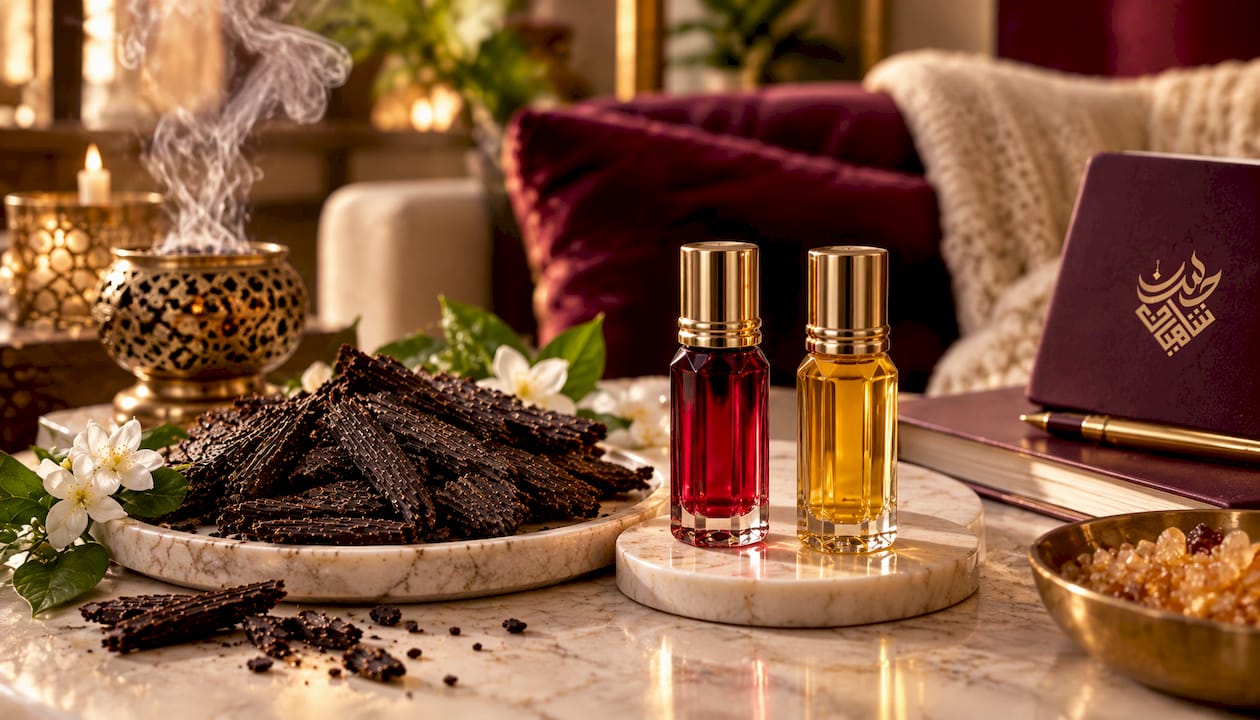
If you want a place to begin, try our Special Mix Oud Dhoop, a woody musk with aqua and jasmine, or browse the full incense and fragrance collections.
FAQ
How much incense should I burn in a small room?
For a room under about 100 square feet, one slim stick for 10 to 15 minutes is usually enough, then extinguish it. Keep a window cracked so the air stays fresh. If the scent still feels strong, burn less of the same incense next time.
What is the difference between incense sticks and bakhoor?
Sticks are ready to light and burn on their own, while bakhoor comes as chips, blocks or pastilles that are warmed on charcoal or an electric burner. Bakhoor is traditionally used to perfume a whole house or welcome guests. Sticks are quicker for everyday use.
Is incense safe to burn at home?
It can be enjoyed with sensible habits: ventilate the room, keep sessions short, use a heatproof holder and never leave it burning unattended. The EPA considers incense smoke an indoor pollutant source in rooms where it is burned regularly. If anyone in your home has asthma or other breathing concerns, ask their doctor first.
Which incense scents suit relaxation?
Resinous, woody, herbal and lavender-forward notes tend to feel calming. Sandalwood, frankincense, amber and vanilla blends are classic choices for a bedroom or quiet corner. Burn them briefly and ventilate afterward.
Is incense a good gift?
Yes, especially when you pair it with a holder or burner so the recipient can use it right away. A sandalwood and vanilla blend is a warm, widely loved choice, and bakhoor carries a tradition of hospitality that suits housewarmings.
Sources
- How to Choose Incense Scents for Rooms and Moods
- 12 Best Incense, According to GQ’s Fragrance Expert (2025)
- Incense, Wikipedia
- Masala vs Dipped Incense: Indian Incense Types
- EPA: Candles and Incense as Potential Sources of Indoor Air Pollution
- The Presence of Aromatic Substances in Incense, Applied Sciences 2023
- The Best Incense Sticks, Cones, and Papers to Give as Gifts
- Organic lavender bath salts

Comments (0)
There are no comments for this article. Be the first one to leave a message!